DarkSword iOS Exploit Chain: Why iPhone Users Should Update Now

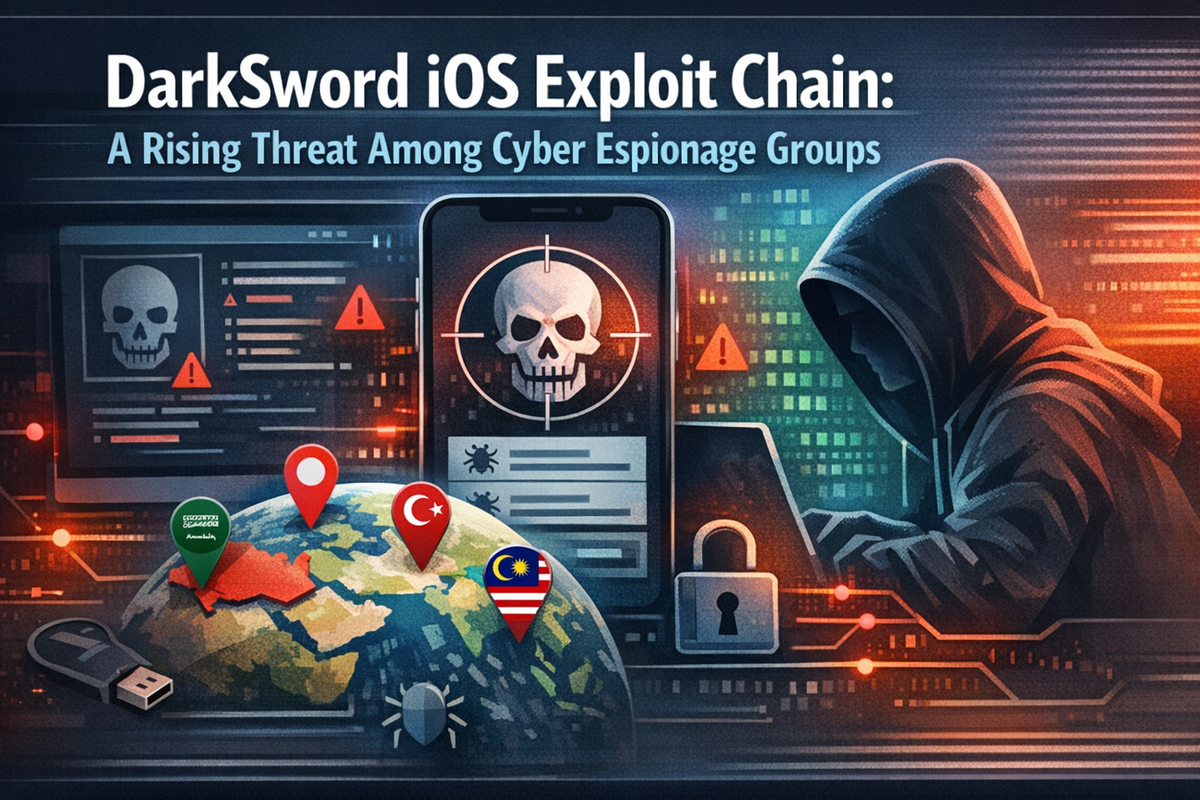
DarkSword is the latest reminder that mobile devices remain a high-value target for advanced attackers. According to Google Threat Intelligence Group, the exploit chain was used by multiple commercial surveillance vendors and suspected state-backed actors in campaigns observed since at least November 2025. Google said the activity targeted users in Saudi Arabia, Turkey, Malaysia, and Ukraine, and that DarkSword supported iOS versions 18.4 through 18.7.
What makes DarkSword especially serious is its depth. Google described it as a full-chain iOS exploit that used six vulnerabilities to fully compromise a device. After a successful intrusion, researchers identified three malware families tied to the attacks: GHOSTBLADE, GHOSTKNIFE, and GHOSTSABER. Google also linked the spread of this exploit chain to a broader pattern seen with earlier iOS exploitation activity, including the previously disclosed Coruna exploit kit.
This matters beyond technical circles because a compromised smartphone can expose far more than messages. Google’s published analysis says GHOSTBLADE collected data including cryptocurrency wallet data, Safari history, bookmarks, cookies, installed application lists, and other system information. iVerify’s technical review also found evidence of wallet-focused exfiltration logic that searched for files and app data tied to major crypto wallets, hardware wallet apps, exchanges, and Web3 tools.
For crypto users, that means the risk is not limited to the phone itself. If an attacker gains deep access to an iPhone, the device can become a gateway to sensitive wallet-related information, stored tokens, browsing activity, and other personal data. iVerify’s analysis also documented attempts to access copied keychain material, Wi-Fi passwords, iCloud-related data, and other forensic artifacts, showing how broad the post-compromise data collection could become.
Google said it reported the DarkSword vulnerabilities to Apple in late 2025 and that all of them were patched by the release of iOS 26.3, though most had been addressed earlier. Google urged users to update to the latest iOS version and recommended enabling Lockdown Mode where updating is not possible. iVerify separately advised users to move to iOS 18.7.6 or iOS 26.3.1, adding that the exploit would not have worked on devices with Lockdown Mode active unless extra bypasses were available.
The wider lesson is simple: mobile security is no longer just a privacy issue for a narrow group of high-risk targets. Advanced exploit chains are being reused across multiple actors, which raises the stakes for ordinary users, journalists, executives, travelers, and anyone who stores valuable data on a phone. Keeping devices updated, reducing unnecessary exposure, and using stronger built-in protections are no longer optional habits. They are part of basic digital safety.
Conclusion
DarkSword is not just another technical disclosure. It is a clear example of how advanced mobile exploit chains can spread across different threat actors and put sensitive personal data at risk. For iPhone users, especially those who manage financial apps, crypto tools, or sensitive communications on mobile, staying updated is the most practical defense right now.
Key takeaways
- DarkSword is a full-chain iOS exploit disclosed by Google Threat Intelligence Group on March 18, 2026.
- Google said it was used by multiple threat actors since at least November 2025.
- The exploit targeted iOS 18.4 through 18.7 and used six vulnerabilities.
- Researchers linked post-compromise activity to malware families named GHOSTBLADE, GHOSTKNIFE, and GHOSTSABER.
- Published analysis shows the malware sought sensitive data, including cryptocurrency wallet-related information and other private device data.
- Recommended action: update iOS and use Lockdown Mode if an update is not possible.
Source: Google Threat Intelligence Group (Google Cloud Blog), with coordinated research references to Lookout and iVerify.
Disclaimer: This article is provided for educational and informational purposes only. It does not constitute legal, financial, cybersecurity, or professional advice. Readers should verify important information through official sources before taking action.